Quick answer
Separate green waste from timber, fencing and other mixed rubbish. If you have a large amount to remove, a garden clearance service can save time and avoid multiple trips to the tip.
Start by sorting the piles
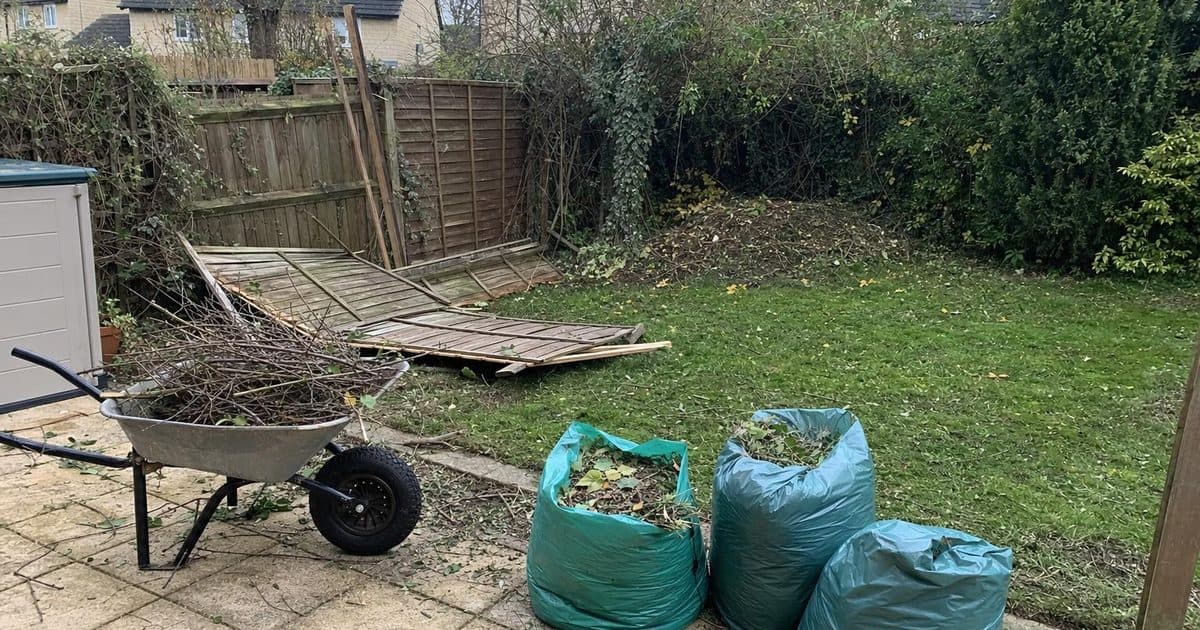
After a big garden clear-out, it helps to deal with the waste in stages rather than moving everything into one heap. That makes it easier to see what can be reused, what needs breaking down, and what should be taken away as mixed waste.
A simple first sort usually works well. Put soft green waste together, keep hard materials separate, and set aside anything bulky that may need special handling. If you are working in a Chippenham garden with limited access, sorting early also makes loading and transport much easier.
- Place grass cuttings, leaves and small plant material in one area.
- Keep branches, hedge trimmings and logs together.
- Separate fence panels, posts and trellis from green waste.
- Put bags of rubble, old pots and broken garden items into a mixed waste pile.
What counts as garden waste?
Garden waste is usually the organic material left behind after pruning, mowing, digging or tidying outdoor spaces. In a typical clear-out, that means cuttings, weeds, leaves, turf and similar material. Some jobs also produce mixed waste that is not strictly green waste, such as old edging, plant pots or broken outdoor furniture.
It is worth separating the two because green waste is easier to handle on its own. Mixed rubbish can take longer to sort later, especially once it is all damp or compacted together. Keeping it organised from the start is one of the easiest ways to make the whole job feel manageable.
Green waste vs mixed rubbish
Green waste is generally the soft, natural material from the garden. Mixed rubbish is everything else left over from the clear-out, including timber, plastic, metal and damaged garden fittings. If you are unsure where something belongs, it is often best to keep it out of the green waste pile until you can check it properly.
Items that need extra care
Some garden waste is heavier or more awkward than it first looks. Wet soil, broken slabs, old sleeper timber and rotting fence panels can all add up quickly. If you are lifting these by hand, take your time and avoid overloading bags or buckets.
Common disposal options in Chippenham
There are a few practical ways to clear garden waste after a big tidy-up. The best option depends on how much you have, how much sorting is needed and whether the waste includes bulky items.
For small amounts, you may be able to bag everything and remove it in stages. For larger clear-outs, it is often easier to use a service that can collect the waste in one visit. That can be especially useful if your garden has awkward access or if the waste has been left in several separate piles.
When a DIY approach makes sense
If you only have a modest amount of lawn clippings, leaves and light trimmings, a DIY approach can work well. You may be able to compost some material, reuse branches for mulch, or take smaller loads away yourself.
That said, DIY removal can become time-consuming once the waste is heavy, wet or mixed with old garden fittings. If you need to make repeated trips, or if the waste will not fit neatly into bags, it may be simpler to arrange Garden Clearance or Rubbish Removal.
| Waste type | Best approach |
|---|---|
| Grass cuttings and leaves | Bag, compost or arrange green waste removal |
| Branches and hedge trimmings | Bundle separately and load carefully |
| Fence panels and timber | Keep apart from green waste and remove as mixed rubbish if needed |
| Soil, rubble and broken pots | Collect separately due to weight and mess |
Handling soil, fencing and timber
After a garden clear-out, the biggest headaches are often the heavy and awkward items. Soil, old fencing and timber do not behave like loose green waste, so they need a little extra planning.
Dealing with soil and turf
Soil is dense, especially if it is wet. Put it into smaller bags or containers rather than trying to move large loads at once. Turf can also be heavy if it is stacked together, so break it down into manageable sections before moving it.
If you have more soil than you can easily shift yourself, it may be better to arrange a collection rather than making multiple trips. This can save a lot of lifting and reduce the chance of spilling soil along the way.
Old fencing and timber
Fence panels, posts, trellis and other timber items should be kept separate from green waste. They are bulky, can splinter, and often take up more space than expected. If the wood is rotten or attached to metal fixings, it may be easier to have it taken away as part of a mixed waste load.
If you are also removing a shed, broken garden storage or timber offcuts from a project, a service such as Shed Clearance may be a better fit than trying to move everything in separate stages.
Saving time on a large clear-out
Big garden jobs can drag on when waste is left sitting in piles for days. The longer it stays in place, the harder it can be to load, especially if rain makes it heavier or if it gets mixed with soil and debris.
A straightforward collection can make the process much smoother. It also means you can finish pruning, clearing and tidying without worrying about how you will get rid of every separate pile afterwards. For larger jobs in Chippenham, that is often the simplest way to keep the project moving.
If your clear-out has created a mix of branches, damaged fencing, old garden furniture and general clutter, a combined collection can be more practical than trying to sort everything into several trips. It can also help if you want the garden ready for a new layout, planting or landscaping work.